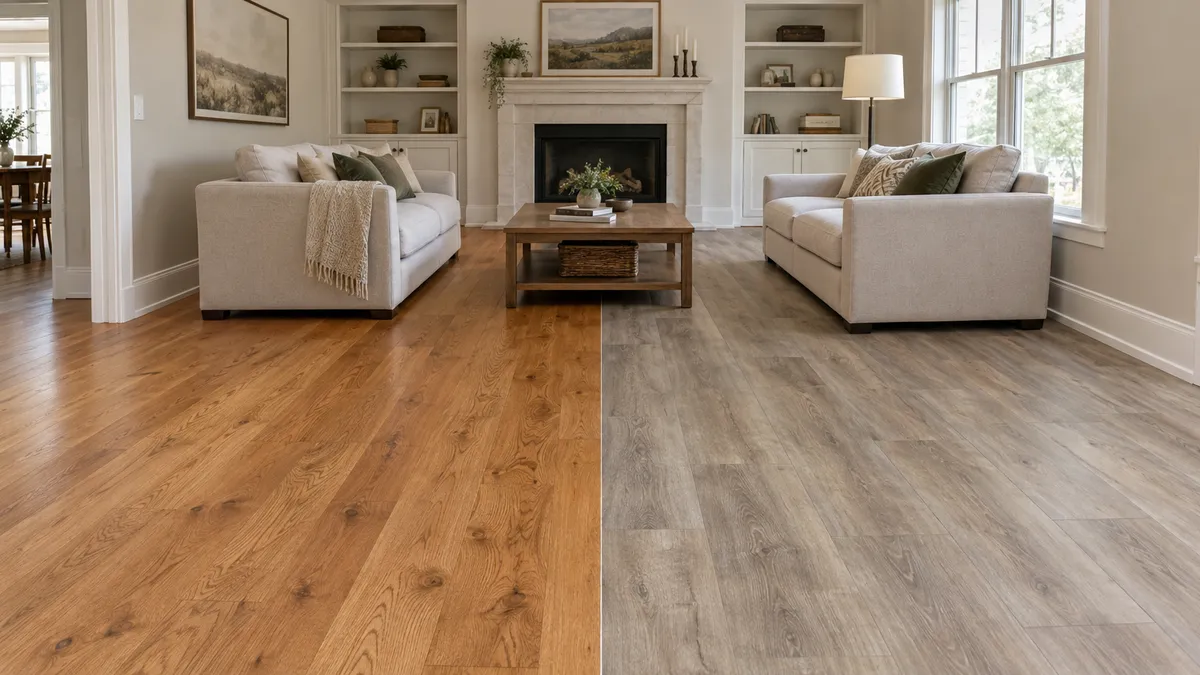
Hardwood vs. Luxury Vinyl Plank Flooring: Which Is Right for Your Home?
Choosing new flooring is one of the most consequential decisions you'll make in a home renovation. The floor sets the tone for every room — it affects how the space looks, how it feels underfoot, how well it holds up over time, and how much effort it takes to keep clean. Two of the most popular options homeowners compare today are hardwood and luxury vinyl plank (LVP).
Both are attractive, durable, and widely used in remodeled homes. But they're very different products, and the right choice depends on your household's lifestyle, your budget, and where the flooring is going. Here's an honest breakdown of both so you can make a confident decision.
What Is Hardwood Flooring?
Hardwood flooring is milled from real wood species — oak, maple, hickory, walnut, and others. It comes in two primary forms:
- Solid hardwood: A single solid piece of wood, typically ¾ inch thick. It can be sanded and refinished multiple times over its lifetime.
- Engineered hardwood: A real wood veneer bonded to layers of plywood. More dimensionally stable than solid hardwood and better suited to environments with humidity fluctuation.
Hardwood has been a staple of home design for generations, valued for its natural warmth, character, and the way it improves with age.
What Is Luxury Vinyl Plank Flooring?
Luxury vinyl plank is a synthetic flooring product engineered to closely mimic the appearance of wood. Modern LVP uses high-resolution photography and embossed textures to replicate the grain and feel of real wood at a level that can be genuinely convincing.
LVP is typically constructed in layers: a rigid or semi-rigid core, a photographic design layer, and a protective wear layer on top. The thickness of that wear layer — measured in mils — largely determines how durable the product is. Thicker wear layers (12 mil or higher) are appropriate for high-traffic homes.
LVP has grown rapidly in popularity over the past decade because it combines a wood-look aesthetic with waterproof performance and easier installation.
Cost Comparison
Flooring costs vary by product quality, room size, and installation complexity, but as a general frame of reference:
- Hardwood: Solid hardwood typically runs higher in both material and installation cost, reflecting the value of the natural material and the skill required to install it properly. Engineered hardwood tends to fall somewhere between solid hardwood and LVP.
- Luxury vinyl plank: LVP is generally the more budget-friendly option per square foot, and its floating installation method can reduce labor costs as well.
That said, real hardwood holds and can build home value over time in ways that synthetic flooring may not — so the total cost picture includes more than just what you pay at installation.
Durability and Scratch Resistance
This is one area where the two products diverge meaningfully.
Hardwood is a natural material and it shows it. It scratches. It dents. High-traffic households with pets, kids, or frequent foot traffic will see wear — particularly in softer wood species. The upside is that solid hardwood can be sanded down and refinished to restore its appearance, sometimes multiple times over the life of the floor.
Luxury vinyl plank is generally more resistant to scratches and surface dents in day-to-day use, especially products with thicker wear layers. It handles the demands of active households well. The trade-off: when LVP is significantly damaged, it typically cannot be refinished — individual planks must be replaced instead.
For homes with dogs, young children, or heavy daily use, LVP often has a practical edge in terms of everyday maintenance and resilience.
Water and Moisture Resistance
This is perhaps the single clearest advantage LVP holds over hardwood.
Solid hardwood and moisture are a difficult combination. Wood expands and contracts with humidity changes, can warp with prolonged moisture exposure, and is generally not recommended for spaces like bathrooms, laundry rooms, or below-grade basements.
Luxury vinyl plank is 100% waterproof. It can handle spills, humidity, and wet areas without warping, swelling, or sustaining damage. This makes it the clear choice for bathrooms, kitchens, mudrooms, laundry areas, and finished basements.
Engineered hardwood offers improved moisture tolerance over solid hardwood but is still not waterproof in the way LVP is.
Look and Feel Underfoot
Here is where personal preference and honest assessment both matter.
Hardwood has a warmth and depth that is difficult to replicate. The grain variation, the texture, the way light interacts with real wood — these qualities are inherent to the material and improve over time. Walking on real hardwood has a solidity and warmth underfoot that many homeowners find irreplaceable.
High-quality LVP has come a long way. The best products today are visually convincing at normal viewing distances, and the rigid core construction gives them a firmer feel underfoot than older vinyl products. That said, most homeowners who spend time with both materials can tell the difference up close — in texture, in acoustic resonance, and in the way the surface interacts with light.
If authenticity of material matters to you — especially in prominent living spaces — hardwood is still the benchmark.
Installation Considerations
Hardwood flooring typically requires professional installation. Solid hardwood is nailed or stapled to a wood subfloor and often needs acclimation time before installation. It cannot be installed below grade. The process is more involved and skilled labor is a meaningful factor in the final cost.
Luxury vinyl plank is designed for floating installation — planks click together without adhesive or fasteners in many applications. This makes it easier to install over a variety of existing subfloors and suitable for below-grade spaces. While professional installation is always recommended for the best result, the process is generally more straightforward.
Resale Value and Long-Term Perception
Real hardwood flooring is consistently cited by real estate professionals as a feature that appeals to buyers and supports home value. Buyers often specifically look for homes with hardwood floors, and quality hardwood in good condition is seen as a durable, desirable feature.
LVP is widely accepted by buyers and has become a mainstream flooring choice in renovated homes. However, it is generally not perceived as a premium feature in the same way real hardwood is — particularly in higher-end home markets.
If long-term resale value is a priority, hardwood — especially in main living areas — tends to hold an edge.
Which Should You Choose?
The honest answer is that the best choice depends on where the floor is going and how you live in your home. Here's a simple framework:
- Choose hardwood if you want the authentic look and feel of real wood, you're flooring above-grade living areas, long-term home value matters, and you're willing to care for and periodically refinish the floor.
- Choose luxury vinyl plank if you need waterproof performance, you're flooring a basement or wet area, you have an active household with pets or young children, or you're working with a tighter budget without sacrificing visual appeal.
- Consider mixing both — hardwood in main living areas and primary bedrooms, LVP in the basement, bathrooms, or utility spaces. Many successful remodels use each material where it makes the most sense.
Neither option is objectively better. They serve different needs, and a good flooring decision starts with understanding your specific situation rather than defaulting to one material for every space.
Talk It Through Before You Decide
Flooring is a long-term investment, and it's worth taking the time to evaluate your options carefully — especially when you're remodeling multiple rooms at once. The right flooring for your kitchen may not be the right flooring for your basement, and getting that decision right the first time saves time and money down the road.
At Hansen's Complete Remodeling, we help homeowners think through flooring decisions as part of a broader renovation plan. Whether you're updating a single room or tackling a whole-home project, we can help you find flooring that looks great, holds up to your lifestyle, and fits your budget.
Ready to explore your flooring options? Request a free consultation with our team and let's talk through what makes the most sense for your home.
