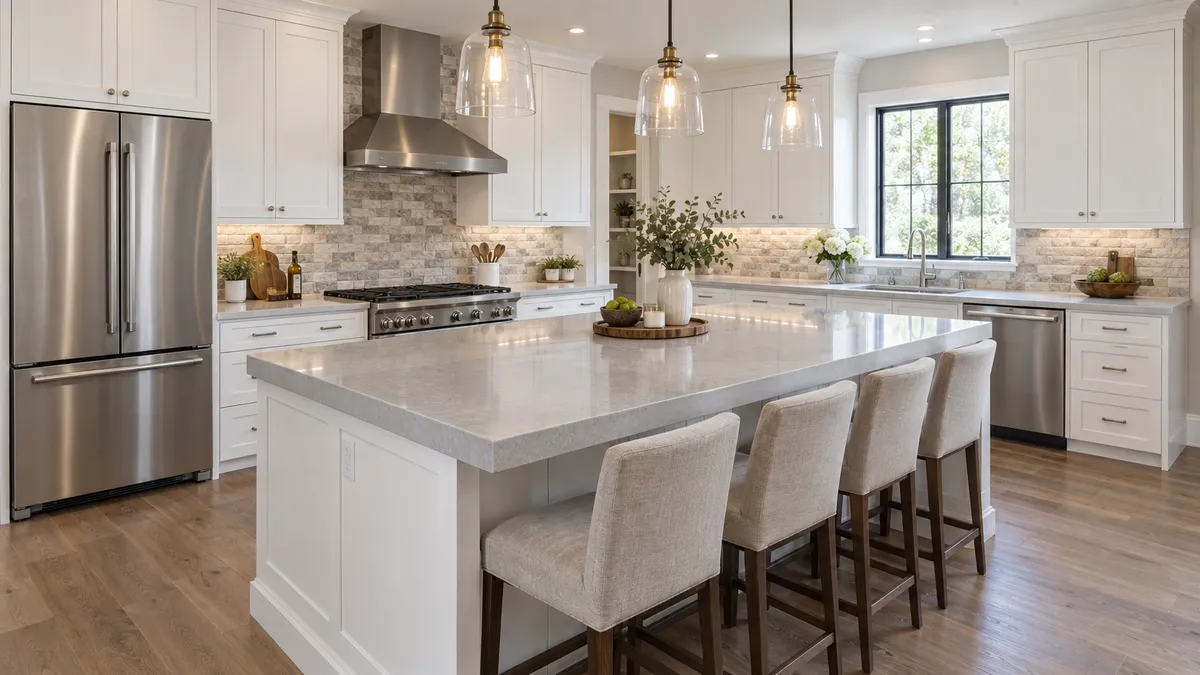
Kitchen Countertop Options Compared: Quartz, Granite, Marble, and More
Choosing a kitchen countertop sounds straightforward until you're standing in a showroom surrounded by dozens of slabs, each with a different price tag, maintenance requirement, and set of trade-offs. Quartz, granite, marble, butcher block, laminate — every option has real advantages and real limitations. The right choice depends on how your kitchen is used, what fits your budget, and what you want to live with for the next decade or longer.
This guide walks through the most popular kitchen countertop materials so you can evaluate each one honestly and move into your remodel with a clear direction.
Quartz: The Low-Maintenance Standard
Quartz countertops have become one of the most popular choices in kitchen remodels, and for good reason. Engineered from ground quartz stone bound with resin, they offer a consistent, polished look that works in traditional, transitional, and modern kitchens alike.
What makes quartz appealing
- Non-porous surface: Quartz doesn't require sealing and resists staining from coffee, wine, and cooking oils far better than natural stone.
- Durability: It holds up well to everyday kitchen use and is highly resistant to scratching and chipping.
- Consistent appearance: Because it's manufactured, you won't see dramatic variation between slabs — a benefit if you want a uniform look.
- Wide color range: From crisp white to deep charcoal to looks that mimic marble, the options are extensive.
Where quartz falls short
- It can be damaged by prolonged heat, so trivets and hot pads are necessary near the cooktop.
- It tends to sit in the higher price range, often similar to mid-grade granite.
- The engineered look, while consistent, lacks the natural character and variation of stone.
For homeowners who want durability and minimal upkeep without sacrificing appearance, quartz is often the most practical choice in a kitchen remodel.
Granite: Natural Character, Proven Performance
Granite has been a top choice in kitchen remodels for decades, and it still earns its place. As a natural stone, each slab is unique — the variation in color, movement, and pattern is part of the appeal.
What makes granite appealing
- Heat resistance: Granite handles hot pots and pans better than quartz, though using trivets is still a good habit.
- Scratch resistance: It's one of the harder countertop materials available.
- Natural beauty: The variation in granite slabs gives kitchens a distinctive, organic look that engineered products can't fully replicate.
- Wide price range: Granite is available at various price points depending on origin, rarity, and color.
Where granite requires attention
- Granite is porous and needs to be sealed periodically — typically once a year depending on use — to protect against staining.
- Slab variation means you'll want to review the actual slab before it's cut, not just a sample.
- Repairs to chips or cracks are possible but more involved than with some other materials.
If you want a countertop with natural character and strong durability, granite remains a solid, time-tested option for kitchen remodels.
Marble: Beautiful but Demanding
Marble is the material that makes kitchen photos look like design magazine spreads. The elegant veining and classic appearance are genuinely hard to replicate. But marble in a working kitchen comes with trade-offs that every homeowner should understand before committing.
What makes marble appealing
- Unmatched aesthetic elegance — marble has a look that's difficult to achieve with any other material.
- Stays relatively cool, which some bakers appreciate for pastry work.
- Each slab is completely unique.
Where marble requires serious consideration
- It etches easily. Acidic substances — citrus juice, wine, vinegar, even some cleaning products — can leave dull marks on the surface. This is a chemical reaction, not a stain, and it can't always be removed.
- It stains. Marble is porous and absorbs liquids, especially oils and pigmented foods, if not sealed and maintained carefully.
- It scratches more readily than granite or quartz.
- It's typically one of the more expensive countertop options.
Marble works beautifully in lower-traffic kitchens or in applications like a baking station or island where the homeowner understands its care requirements. For a high-use family kitchen, the maintenance demands are worth evaluating honestly.
Butcher Block: Warmth and Practicality — With Conditions
Butcher block countertops bring warmth and texture into a kitchen that stone surfaces simply don't. They're especially popular in farmhouse, transitional, and cottage-style kitchens, and they can soften the look of an otherwise cool or contemporary space.
What makes butcher block appealing
- A genuinely warm, natural look that contrasts beautifully with stone, tile, or painted cabinets.
- Can be sanded and refinished if damaged — scratches and dents can often be repaired in place.
- Gentler on knives than stone surfaces.
- Generally more affordable than stone options at the entry level.
Where butcher block requires attention
- It needs regular oiling or sealing to prevent drying, cracking, and warping.
- Standing water and prolonged moisture exposure can damage wood over time.
- It can be scratched and dented in daily use — though many homeowners appreciate the developing patina.
- It's not an ideal material directly next to a sink if water management isn't carefully handled.
Butcher block works well as an island surface, a secondary prep area, or in kitchens where the owner is comfortable with regular maintenance and appreciates a material that shows its use over time.
Laminate: The Practical Budget Option
Laminate countertops have come a long way from the dated patterns of decades past. Today's laminate options can convincingly mimic stone, wood, and concrete at a fraction of the cost — and they're worth including in any honest countertop comparison.
What makes laminate appealing
- Significantly lower cost than stone or solid surface options.
- Easy to clean and relatively stain resistant with proper care.
- Available in a wide range of colors, patterns, and finishes including realistic stone looks.
- Lighter weight, which can simplify installation in some situations.
Where laminate falls short
- It cannot be repaired once chipped or burned — damaged sections typically need full replacement.
- It's vulnerable to heat and can scorch or warp near hot cookware.
- It doesn't hold resale value the way stone countertops typically do.
- It can look less premium in a higher-end kitchen remodel.
Laminate is a reasonable choice for budget-conscious remodels, rental properties, or homeowners who plan to upgrade in the future. It delivers function without the long-term investment.
Porcelain and Sintered Stone: The Newer Contenders
A newer category of countertop materials — large-format porcelain slabs and sintered stone (such as products like Dekton) — has gained meaningful traction in kitchen remodeling. These materials are manufactured under extreme heat and pressure, resulting in surfaces that are extremely hard, nearly impervious to staining, and highly resistant to heat and UV exposure.
They're worth asking your remodeling contractor about, particularly for contemporary kitchens where a sleek, ultra-thin edge profile is part of the design. They tend to sit at the higher end of the price range, and working with very large, thin slabs requires experienced fabrication.
How to Choose the Right Countertop for Your Kitchen
With so many materials available, the decision comes down to a few practical questions:
- How is your kitchen actually used? A busy family kitchen with young children calls for a different material than a low-traffic kitchen used primarily for entertaining.
- How much maintenance are you comfortable with? If regular sealing or careful surface management isn't appealing, quartz or porcelain may serve you better than natural stone or wood.
- What's your realistic budget? Material cost is just one piece — fabrication, edge profiles, cutouts for sinks and faucets, and installation all affect the total investment.
- What's the overall design direction? A farmhouse kitchen with painted cabinets has different countertop needs than a sleek modern kitchen with flat-front cabinetry.
- Are you thinking about resale value? Stone countertops — particularly quartz and granite — consistently perform well in resale contexts and are often expected by buyers in mid-to-upper market homes.
There's no single "best" countertop material. The right answer is the one that matches your household's habits, your design goals, and your budget — and that you'll still be happy with years from now.
Working with a Remodeling Contractor on Countertop Selection
A kitchen remodel involves a lot of interconnected decisions, and countertop selection doesn't happen in isolation. The countertop material affects the edge profile, the sink style and mounting method, the backsplash, and sometimes cabinet construction. A knowledgeable remodeling contractor can walk you through those relationships before any selections are finalized.
It also pays to see full slabs in person when choosing natural stone. Samples give you a general sense of color and movement, but the actual slab you'll live with can look quite different. A good contractor or fabricator will guide you through the selection process so there are no surprises.
For more on what to expect throughout a kitchen remodel, visit Hansen's kitchen remodeling services page to see how we approach kitchen projects.
Ready to Start Planning Your Kitchen Remodel?
Countertop selection is one of the most rewarding decisions in a kitchen remodel — it's a surface you interact with every single day, and the right material makes the kitchen genuinely easier and more enjoyable to use. Taking the time to evaluate your options honestly, rather than defaulting to what's trending, leads to better outcomes.
If you're planning a kitchen remodel and want to talk through countertop options, layout decisions, or the overall scope of the project, we're here to help. Contact Hansen's Complete Remodeling to request a free consultation and take the first step toward a kitchen that works exactly the way you need it to.
