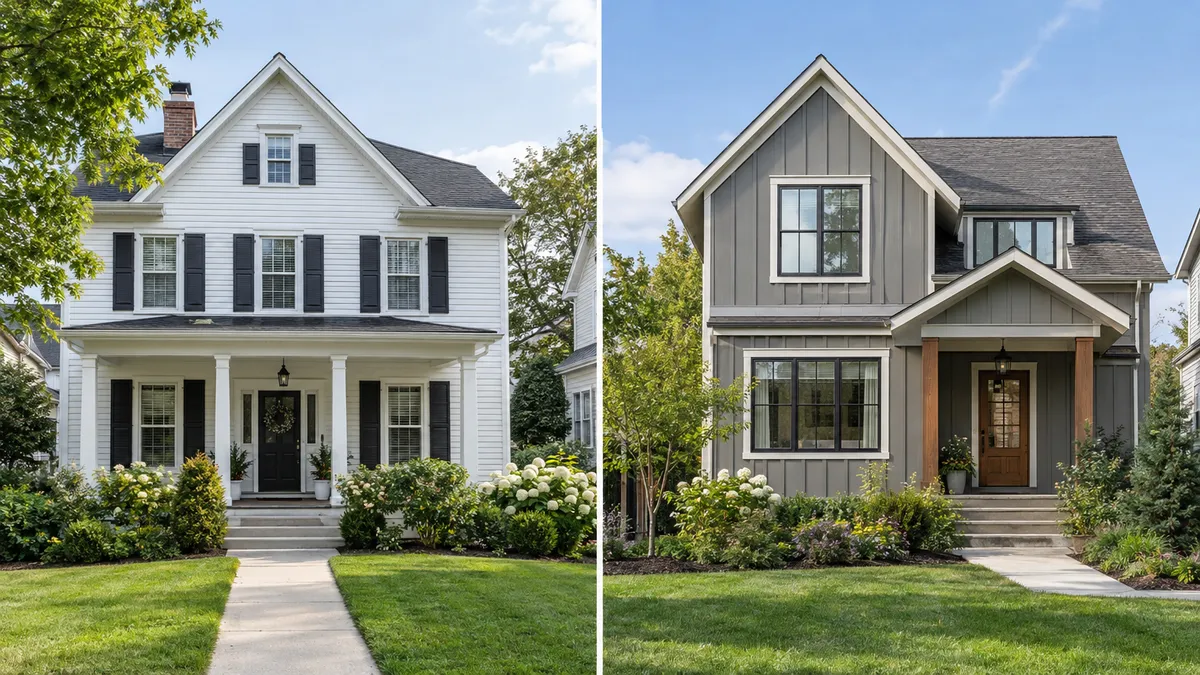
Vinyl Siding vs. Fiber Cement Siding: Which Is Right for Your Home?
Two of the Most Popular Siding Options — and How They Stack Up
When it's time to replace your home's siding, two materials consistently rise to the top of the list: vinyl and fiber cement. Both are widely used, available in a range of styles, and durable enough to last for decades when properly installed. But they perform differently, cost differently, and require different levels of ongoing care.
If you're weighing your options, here's a straightforward look at how vinyl and fiber cement siding compare — so you can make a decision that fits your home, your budget, and your long-term goals.
What Is Vinyl Siding?
Vinyl siding is made from PVC (polyvinyl chloride) and has been the most popular residential siding material in the United States for decades. It's manufactured in a wide variety of profiles — including lap, Dutch lap, beaded, vertical board, and shake-style panels — and comes in an extensive range of colors.
One of vinyl's biggest selling points is that the color runs through the material itself, which means it doesn't require painting and typical surface chips or scuffs are less noticeable than they might be on painted surfaces.
What Is Fiber Cement Siding?
Fiber cement siding is a composite material made from a blend of cement, sand, and cellulose fiber. It was designed to combine the natural appearance of wood with the durability advantages of a cement-based product. Fiber cement can be manufactured to convincingly mimic wood lap siding, wood shingles, stucco, or masonry — and it takes paint exceptionally well.
Products in this category have grown significantly in popularity over the past two decades, and many homeowners choose fiber cement specifically for its premium look and long-term performance.
Durability: How Do They Hold Up Over Time?
Both materials are designed to last — but they face different vulnerabilities.
Vinyl Siding Durability
Vinyl holds up well against moisture, insects, and rot because it doesn't absorb water and isn't an organic material. However, it can be susceptible to impact damage (hail, flying debris), and older or lower-quality vinyl can become brittle in very cold temperatures. It can also warp or buckle in extreme heat if not properly installed with appropriate expansion gaps.
Premium vinyl products have improved significantly in thickness and rigidity, and higher-grade lines perform considerably better than entry-level options.
Fiber Cement Durability
Fiber cement is a genuinely dense, solid material. It resists impact better than vinyl, doesn't warp in heat, and holds up extremely well in regions that see significant weather variation. It's non-combustible, which can be an advantage in fire-prone areas, and it resists insects and rot.
The main vulnerability for fiber cement is moisture penetration — specifically at cut edges and joints. Proper installation and regular repainting help protect those areas and extend the material's life significantly.
Maintenance Requirements
Vinyl Siding Maintenance
This is one of vinyl's most practical advantages. Because the color is built into the material, vinyl doesn't need to be painted. Routine maintenance is minimal: occasional washing with a garden hose or soft brush to remove dirt, pollen, and mildew keeps it looking good year after year. Damaged panels can usually be replaced individually without refinishing the entire home.
Fiber Cement Maintenance
Fiber cement requires more consistent upkeep. It is typically factory-primed and either sold pre-painted or painted after installation. Over time, the paint will fade and need to be refreshed — most manufacturers recommend repainting every 7 to 15 years depending on climate and paint quality. Caulking at joints and around windows and doors should also be inspected and refreshed periodically.
The tradeoff is that fiber cement, when properly maintained, can look genuinely stunning for decades — and many homeowners consider the painting schedule a worthwhile investment for the aesthetic result.
Appearance and Curb Appeal
This is where personal preference and home style play the biggest role.
Vinyl siding has come a long way from the flat, plastic-looking products of earlier generations. Today's premium vinyl lines offer realistic wood-grain textures, deeper profiles, and architectural detail options that significantly improve curb appeal. That said, a trained eye can often identify vinyl up close.
Fiber cement consistently receives higher marks for appearance. It takes paint in any custom color, holds detail well, and closely replicates the look of natural wood — often indistinguishably so from the street. For homeowners who want a premium, high-end exterior appearance, fiber cement typically delivers a more elevated result.
Cost Comparison
Siding costs vary based on home size, complexity, region, labor, and the specific product grade selected. As a general framework:
- Vinyl siding tends to have a lower material cost and is generally faster to install, which keeps both material and labor costs lower overall. It's often the most budget-conscious siding replacement option.
- Fiber cement siding typically costs more per square foot for materials, and installation requires more time and skill — the panels are heavier and need to be cut with specialized tools. Total project costs are usually higher than a comparable vinyl installation.
It's worth noting that the range within each category is wide. Entry-level vinyl and premium vinyl can differ substantially in cost and performance. The same is true of fiber cement product lines. Getting an accurate quote specific to your home and chosen product is the most reliable way to compare real costs.
Energy Efficiency
Neither vinyl nor fiber cement siding provides meaningful insulation on its own — the R-value of either material is relatively low. However, many vinyl siding products are available as insulated versions, with foam backing bonded directly to the panel. Insulated vinyl siding can noticeably improve a home's thermal performance, particularly on homes with minimal existing wall insulation.
Fiber cement can also be installed over continuous insulation board for improved energy performance, though this adds to overall project cost. For the best energy results with either material, the type and condition of the wall assembly beneath the siding matters as much as the cladding itself — something a qualified contractor can evaluate during your project planning.
Which Is the Better Choice for Your Home?
There's no single right answer — it depends on your priorities.
Vinyl siding may be the better fit if:
- Lower upfront cost is a primary consideration
- You want minimal ongoing maintenance
- You're updating a home where function and value are the main goals
Fiber cement may be the better fit if:
- Curb appeal and premium appearance are top priorities
- You plan to stay in the home long-term and want to invest in a durable, attractive exterior
- Your neighborhood or HOA has design standards that call for a wood-like finish
- You live in a climate with significant weather extremes or hail risk
Many homeowners find that the right choice becomes clear once they look at both options in the context of their home, their neighborhood, and their five- to ten-year goals. A good siding contractor can help you evaluate which direction makes the most sense for your specific situation.
Ready to Explore Your Siding Options?
Whether you're leaning toward vinyl, fiber cement, or just beginning to research your choices, Hansen's Complete Remodeling is here to help you think it through. We work with homeowners on exterior remodeling projects including siding replacement and can walk you through the options that fit your home and budget.
Contact us to request a free consultation and get a clear picture of what a siding project could look like for your home.
